How AI Macro Data Aggregation Is Changing the Speed of Top-Down Analysis Integration
April 15, 2026 | By GenRPT Finance
In the world of finance, understanding macroeconomic data is crucial for making informed decisions and staying ahead of market trends. Finance reports often provide a comprehensive view of economic indicators, market conditions, and industry insights. Traditionally, finance reports have been compiled manually or through limited software tools, which can be time-consuming and prone to error. However, recent advancements in artificial intelligence have transformed the landscape. AI macro data aggregation is revolutionizing top-down analysis by significantly increasing the speed and accuracy of data integration, enabling financial analysts and decision-makers to act more swiftly and confidently.
Definition
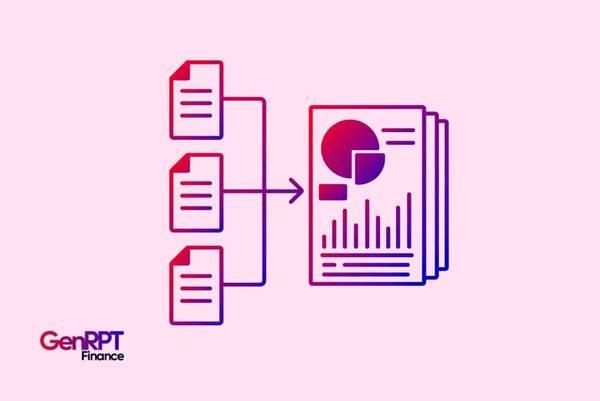
AI macro data aggregation refers to the use of artificial intelligence technologies to collect, process, and compile large volumes of macroeconomic data from diverse sources. These sources can include government reports, financial news, market data feeds, industry publications, and more. The goal is to create a unified, real-time overview of key economic indicators, which can then be used to generate detailed finance reports and perform comprehensive financial analysis. By automating data collection and processing, AI enhances the ability to perform industry insights and conduct timely top-down analysis, which looks at the big picture before drilling down into specific financial details.
How It Works
The process begins with AI-powered algorithms scanning multiple data sources across the internet and private databases. Natural language processing (NLP) techniques allow these systems to interpret and extract relevant information from unstructured data such as news articles, government releases, and earning reports. Machine learning models then sort and categorize this information based on relevance and reliability.
Once collected, the macro data is organized into structured formats. These algorithms continuously update the datasets, providing real-time insights as new information becomes available. Advanced data integration tools ensure that this aggregated data aligns correctly with existing financial models and industry benchmarks. The result is a comprehensive, up-to-the-minute data set ready for analysis, enabling finance teams to quickly identify trends, assess risks, and make strategic decisions.
This automation reduces the manual effort involved in collecting and verifying data, which historically could take days or weeks. Instead, the process now takes seconds or minutes, vastly improving the speed of top-down analysis.
Examples
For example, a financial analyst preparing a quarterly industry report can leverage AI macro data aggregation tools to instantly access the latest employment figures, inflation rates, and policy announcements from multiple economic sources. These insights, combined with market data, provide a clear picture of industry health and potential forecast trends.
Similarly, investment firms use AI to monitor global economic developments continuously. When new macroeconomic data is released, the system instantaneously updates the financial models and industry insights, allowing portfolio managers to adjust strategies promptly. This capability is especially valuable during volatile periods when rapid responses can significantly impact investment outcomes.
Another example involves multinational corporations assessing market entry strategies. They rely on AI aggregated macro data to understand regional economic conditions, consumer sentiment, and regulatory changes. Integrating this data into their finance reports enables more accurate risk assessments and strategic planning.
Use Cases
The integration of AI macro data aggregation in financial analysis brings numerous practical benefits. It enhances the speed and accuracy of finance reports, providing a timely overview of industry insights and economic conditions. Financial institutions can better anticipate market shifts by continuously updating macroeconomic data, leading to more informed investment decisions.
In top-down analysis, this technology allows for a rapid assessment of macroeconomic trends before diving into detailed company or sector analysis. This approach helps identify the most promising investment opportunities or risks early in the decision-making process.
Corporate strategy teams benefit from AI aggregation by obtaining up-to-date industry insights that influence their market entry or expansion strategies. Regulators and policymakers can also use these tools to monitor economic health and craft data-driven policies.
Overall, AI macro data aggregation supports more agile, data-driven decision-making processes across the financial sector. It bridges the gap between raw macroeconomic data and actionable insights, supporting a more responsive approach to market dynamics.
Summary
AI macro data aggregation is transforming the speed of top-down analysis and the creation of finance reports. By automating the collection and processing of macroeconomic data from multiple sources, it enables real-time industry insights and faster decision-making. This innovation not only improves the accuracy and timeliness of financial analysis but also empowers organizations to respond quickly to market changes.
Supporting this evolution, GenRPT Finance offers advanced solutions that harness AI macro data aggregation to streamline financial analysis. Its tools integrate vast amounts of macroeconomic data efficiently, providing finance professionals with comprehensive, up-to-date insights. With GenRPT Finance, organizations can elevate their top-down analysis, ensuring that their finance reports reflect the latest industry insights and economic conditions, ultimately leading to more strategic and informed decisions.
