How AI Systems Can Monitor Estimate Dispersion Across Coverage in Real Time
April 10, 2026 | By GenRPT Finance
Monitoring estimate dispersion means tracking how much analysts disagree on forecasts like earnings and revenue. Traditionally, this was done periodically through reports. With AI systems, this tracking can now happen in real time across entire coverage universes. This allows investors to detect changes in uncertainty, sentiment, and risk as they happen, instead of reacting after the fact.
What is estimate dispersion in equity research
Estimate dispersion measures how far analyst forecasts are spread around the consensus. When dispersion is low, analysts largely agree. When dispersion is high, there is significant disagreement. Dispersion is important because it reflects confidence in market expectations. It often signals risk, potential volatility, and the likelihood of earnings surprises.
Why traditional dispersion tracking falls short
Traditional methods rely on static snapshots of analyst estimates. These are often updated quarterly or after major events. This approach has limitations. It misses intra-period changes, delays the identification of risk, and fails to capture how dispersion evolves over time. By the time dispersion is visible in reports, the market may have already reacted.
How AI changes dispersion monitoring
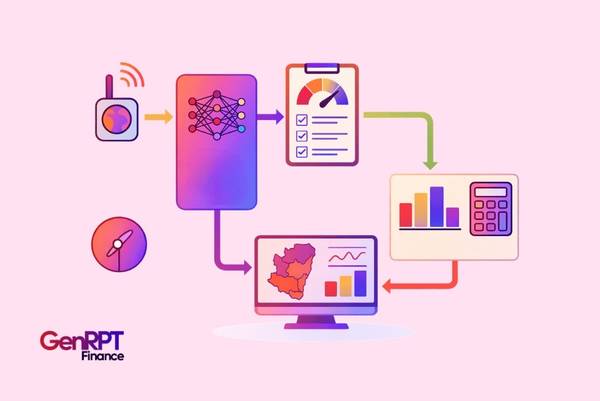
AI systems can process large volumes of analyst data continuously. They track estimate changes as they happen and update dispersion metrics in real time. This allows for a dynamic view of analyst disagreement. Instead of relying on periodic updates, investors can see how sentiment shifts daily or even intraday.
How AI detects meaningful changes in dispersion
AI does not just track numbers. It identifies patterns. For example, it can detect when dispersion is widening rapidly, which may indicate emerging uncertainty. It can also identify when dispersion is narrowing, suggesting increasing confidence. By analyzing the speed and direction of these changes, AI helps distinguish between noise and meaningful signals.
Why tracking dispersion across coverage matters
Looking at dispersion for a single stock is useful, but comparing it across coverage provides deeper insight. If one company shows rising dispersion while its peers remain stable, it may signal company specific risk. If dispersion is increasing across an entire sector, it may indicate broader uncertainty. AI systems make this comparison possible at scale.
How real-time insights improve decision making
Real-time dispersion tracking allows investors to act earlier. Instead of waiting for earnings or reports, they can detect shifts in sentiment as they develop. This helps in adjusting positions, managing risk, and identifying opportunities. Early signals can provide an edge in fast moving markets.
How dispersion connects with other signals
Dispersion should not be analyzed in isolation. AI systems combine it with other indicators such as estimate revisions, trading volumes, and macro trends. For example, rising dispersion along with downward revisions may signal increasing risk. Rising dispersion with stable revisions may indicate uncertainty without clear direction. This combined analysis provides a more complete view.
Common challenges in real-time dispersion monitoring
Despite its advantages, real-time monitoring has challenges. Data quality is critical. Analyst estimates may come from multiple sources with different formats. AI systems must standardize this data. Another challenge is filtering noise. Not all changes are meaningful. Systems must distinguish between minor updates and significant shifts.
How GenRPT Finance enables real-time dispersion analysis
GenRPT Finance uses AI to automate the tracking of analyst estimates across coverage. It continuously updates dispersion metrics and identifies patterns in analyst disagreement. It highlights when dispersion is signaling risk or opportunity. It also provides scenario analysis based on different estimate ranges. This allows users to move beyond static reports and gain real time insights.
How investors can use real-time dispersion signals
Investors can use these signals to improve their strategies. Monitoring sudden increases in dispersion can help identify emerging risks. Tracking narrowing dispersion can signal strengthening consensus. Comparing dispersion across companies helps identify outliers. Combining these insights with valuation and macro data leads to better decision making.
Why real-time monitoring is becoming essential
Markets are moving faster and information flows continuously. Static analysis is no longer sufficient. Real-time monitoring allows investors to keep pace with changing expectations. As AI systems become more advanced, dispersion tracking will become a standard part of equity research workflows.
Conclusion
Estimate dispersion is a powerful signal of uncertainty and market behavior. With AI systems, it can now be monitored in real time across entire coverage universes. This transforms how investors understand analyst disagreement and market expectations. Tools like GenRPT Finance make this possible by turning continuous data into actionable insights, helping investors stay ahead of market shifts.
