How Portfolio Managers Use Continuous Research for Risk Monitoring
June 16, 2026 | By GenRPT Finance
Portfolio managers are increasingly integrating continuous equity research updates into risk monitoring workflows to respond faster to changing market conditions. In the past, portfolio risk assessment often relied on periodic research reviews, quarterly earnings cycles, and scheduled portfolio evaluations. While those processes remain important, they are no longer sufficient on their own.
In 2026, risks emerge much faster than traditional reporting schedules can accommodate. Inflation data, earnings revisions, interest-rate decisions, regulatory announcements, and geopolitical developments can materially affect portfolio exposures within days.
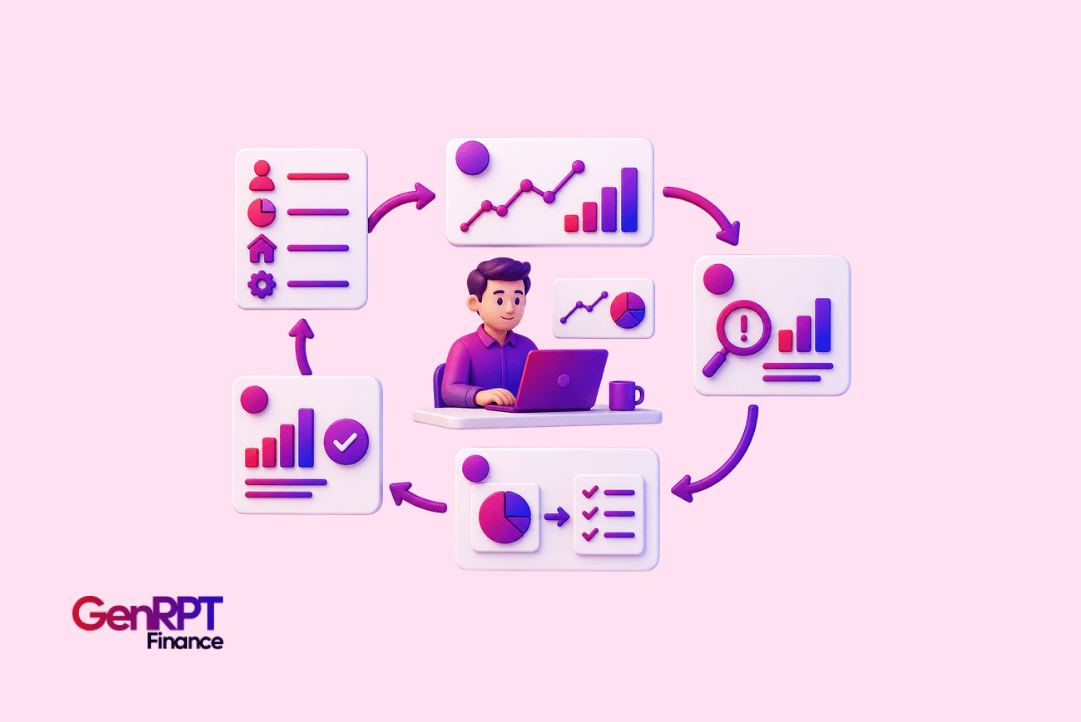
As a result, portfolio managers are moving toward continuous research models that combine real-time investment research, financial forecasting, market risk analysis, and portfolio monitoring. The goal is not simply to identify risks after they appear. The goal is to detect changing conditions early and make better-informed investment decisions.
Why Traditional Risk Monitoring Is Changing
Historically, portfolio risk monitoring focused heavily on historical data.
Managers regularly reviewed:
- Portfolio exposures
- Equity performance
- Sector allocations
- Volatility measures
- Historical correlations
These metrics remain useful.
However, historical data alone often fails to identify emerging risks.
Many portfolio risks now develop through changing expectations rather than completed events.
Examples include:
- Earnings revisions
- Inflation surprises
- Regulatory changes
- Shifts in market sentiment
Continuous equity research helps identify these developments before they are fully reflected in portfolio performance.
The Shift Toward Continuous Research
Continuous research means maintaining an ongoing view of investment conditions rather than waiting for periodic updates.
Research teams monitor:
- Financial reports
- Earnings transcripts
- Industry developments
- Economic releases
- Market sentiment analysis
- Competitive changes
This information feeds directly into portfolio risk assessment processes.
Portfolio managers gain access to current insights rather than relying exclusively on quarterly research cycles.
The result is a more responsive risk management framework.
Why Equity Research Has Become a Risk Management Tool
Many investors associate equity research primarily with stock selection.
Today, equity research also plays an important role in risk management.
Modern equity research reports provide information regarding:
- Competitive threats
- Margin pressures
- Industry disruptions
- Financial risk assessment
- Market risk analysis
Portfolio managers use these insights to evaluate portfolio vulnerabilities.
Research has become a critical input into ongoing risk monitoring workflows.
This expands its role beyond investment opportunity identification.
Earnings Revisions Often Signal Emerging Risks
One of the most valuable sources of risk intelligence comes from earnings revisions.
Research teams continuously monitor changes in:
- Revenue projections
- Earnings forecasts
- Margin expectations
- Capital allocation plans
These revisions often provide early warnings about changing business conditions.
A company may report strong historical results while future expectations begin to deteriorate.
Continuous research helps portfolio managers identify these situations earlier.
This improves risk visibility and supports more proactive decision-making.
Financial Forecasting Supports Dynamic Risk Assessment
Financial forecasting is becoming increasingly integrated into portfolio monitoring.
Investment teams regularly update:
- Revenue projections
- Cash flow forecasts
- Cost of capital assumptions
- Enterprise Value estimates
Changes in forecasts often signal shifts in risk profiles.
For example, declining earnings expectations may increase concerns regarding valuation or growth assumptions.
By incorporating updated forecasts into risk workflows, portfolio managers gain a more current understanding of portfolio exposures.
The Growing Importance of Macroeconomic Outlook Monitoring
Macroeconomic developments influence nearly every portfolio.
Portfolio managers increasingly monitor:
- Inflation trends
- Interest rates
- GDP growth
- Employment conditions
- Consumer spending
Changes in these variables can affect:
- Equity valuation
- Sector performance
- Portfolio returns
- Equity risk
Continuous research helps investment teams understand how evolving economic conditions influence portfolio risks.
This improves both forecasting and investment strategy development.
Market Risk Analysis Is Becoming More Forward-Looking
Traditional risk models often focus on historical performance.
Modern market risk analysis increasingly incorporates forward-looking research.
Investment teams evaluate:
- Earnings expectations
- Industry outlooks
- Policy developments
- Competitive dynamics
- Market sentiment analysis
This helps managers understand risks before they appear in historical metrics.
Forward-looking research provides a more complete view of portfolio vulnerabilities.
Scenario Analysis Is Updated More Frequently
Scenario Analysis has become a core component of risk monitoring.
Portfolio managers evaluate:
- Base-case assumptions
- Bull-case scenarios
- Bear-case outcomes
Continuous research improves scenario analysis by updating assumptions as new information emerges.
Changes in inflation forecasts, earnings expectations, or economic growth can be reflected immediately.
This keeps scenario analysis aligned with current market conditions.
Portfolio Risk Assessment Becomes More Responsive
Portfolio risk assessment traditionally relied on scheduled reviews.
Today, risk assessments increasingly evolve alongside research updates.
Managers evaluate:
- Equity risk
- Geographic exposure
- Sector concentration
- Liquidity analysis
- Financial risk mitigation opportunities
Continuous research allows these evaluations to reflect current conditions.
This improves decision-making and helps reduce potential blind spots.
AI for Data Analysis Enables Continuous Monitoring
The amount of information available to portfolio managers continues to grow.
Research teams process:
- Financial reports
- Audit reports
- Earnings transcripts
- Economic releases
- Market sentiment analysis
AI for data analysis helps organize and prioritize this information.
Modern financial research tools can identify important developments and highlight emerging risks.
This enables continuous monitoring without dramatically increasing research workloads.
Equity Research Automation Improves Workflow Efficiency
Equity research automation supports continuous risk monitoring by streamlining:
- Data collection
- Research generation
- Trend analysis
- Financial modeling updates
- Performance measurement
Automation ensures that research remains current and accessible.
Portfolio managers receive updated information faster, allowing them to respond more effectively to changing conditions.
Geographic Exposure Monitoring Is Becoming More Important
Global portfolios face increasing exposure to international risks.
Research teams monitor:
- Regional economic developments
- Political changes
- Trade policies
- Currency movements
Continuous research helps portfolio managers understand how geographic exposure affects portfolio risk.
This supports diversification decisions and financial risk mitigation strategies.
Why Wealth Managers Are Adopting Similar Approaches
Wealth managers increasingly face the same challenges as institutional investors.
Clients expect advisors to:
- Monitor risks continuously
- Respond quickly to market developments
- Explain changing conditions
- Maintain portfolio discipline
Continuous equity research supports these objectives.
Research becomes an ongoing source of portfolio intelligence rather than a periodic reporting function.
The Future of Risk Monitoring Workflows
Risk monitoring workflows will continue evolving over the coming years.
Future frameworks will increasingly integrate:
- AI for equity research
- Equity research automation
- Real-time financial forecasting
- Continuous market intelligence
- Dynamic portfolio insights
The objective is not simply measuring risk.
The objective is understanding how risks evolve and how portfolios should adapt.
Firms that successfully integrate research into risk monitoring will be better positioned to navigate increasingly complex markets.
Conclusion
Portfolio managers are integrating continuous equity research updates into risk monitoring workflows because traditional review cycles can no longer keep pace with modern markets. Earnings revisions, economic developments, policy changes, and market sentiment shifts can alter portfolio risks long before quarterly research updates become available.
By combining continuous investment research with financial forecasting, market risk analysis, and portfolio risk assessment, firms can improve decision-making and respond more effectively to changing conditions. Platforms such as GenRPT Finance are helping investment teams generate ongoing equity research reports, forecasting updates, scenario analysis, risk assessments, and portfolio insights that support modern risk management workflows. As markets become more dynamic, continuous research integration is becoming a critical component of effective portfolio oversight.
FAQs
Continuous equity research involves ongoing monitoring of companies, industries, economic conditions, and market developments rather than relying solely on periodic updates.
Continuous research helps identify emerging risks and changing investment conditions more quickly than traditional research cycles.
It provides updated information that helps managers evaluate risks, forecasts, and portfolio exposures in real time.
AI for data analysis helps process large volumes of information, identify important developments, and highlight emerging risks.
GenRPT Finance generates ongoing equity research, financial forecasting updates, scenario analysis, risk assessments, and portfolio insights that help investment teams make informed decisions.
