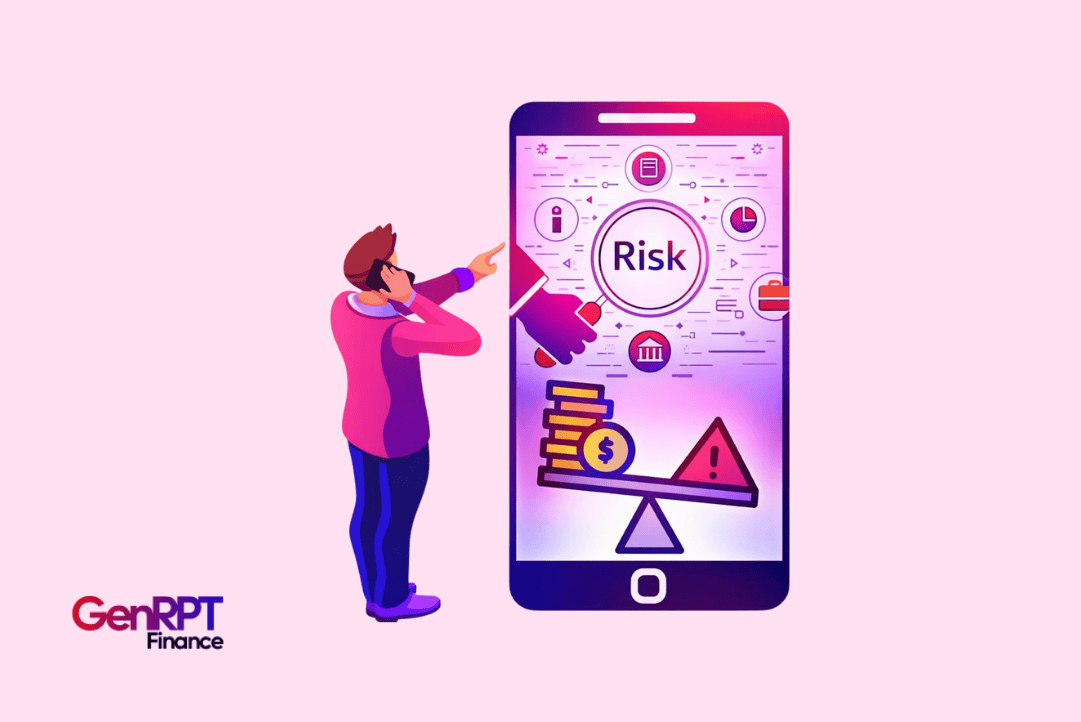
Understanding Downside Risk vs Volatility
January 23, 2026 | By GenRPT Finance
Why does a stock look risky even when volatility appears low?
Equity research often treats volatility as a proxy for risk. This shortcut creates blind spots in equity analysis and investment research. Volatility measures price movement. Downside risk measures loss potential. The two are not the same.
Understanding this difference improves portfolio risk assessment and financial forecasting.
Volatility measures movement, not damage
Volatility tracks how prices fluctuate over time. It appears clearly in equity market data. Investment analysts use it to compare stocks and portfolios.
Downside risk focuses on capital loss. It answers a different question. How bad can things get?
Equity research reports often emphasize volatility because it is easy to calculate. AI for data analysis shows why this approach misses hidden exposure.
Downside risk hides in assumptions
Financial models assume stable relationships between revenue, margins, and demand. When these break, losses compound quickly.
AI for equity research exposes this by stress testing assumptions. It uses scenario analysis and sensitivity analysis to explore extreme outcomes.
Equity research automation makes downside modeling repeatable instead of manual.
Market shocks do not follow averages
Market risk analysis often relies on historical averages. Downside events do not behave like averages.
AI data analysis detects tail risk by analyzing rare but severe patterns across markets. It improves equity market outlook modeling by widening the lens.
This matters for asset managers and portfolio managers who manage long term exposure.
Why volatility feels safer than downside risk
Volatility looks objective. Downside risk feels subjective. Analyst reports often prefer metrics that feel precise.
AI report generators help bridge this gap. They combine structured volatility metrics with unstructured signals like macroeconomic outlook and market sentiment analysis.
This creates clearer investment insights.
Better tools change how risk gets measured
Equity research software shifts focus from static metrics to dynamic risk modeling. Financial research tools powered by AI improve financial risk assessment and mitigation planning.
They help analysts test how changes in cost of capital or liquidity analysis affect equity valuation.
Conclusion
Volatility explains movement. Downside risk explains loss. Treating them as the same weakens equity research quality. GenRPT Finance supports AI driven equity research automation that brings downside risk into everyday forecasting and decision making.
