When a Company’s Capital Structure Becomes the Thesis Rather Than the Background
April 20, 2026 | By GenRPT Finance
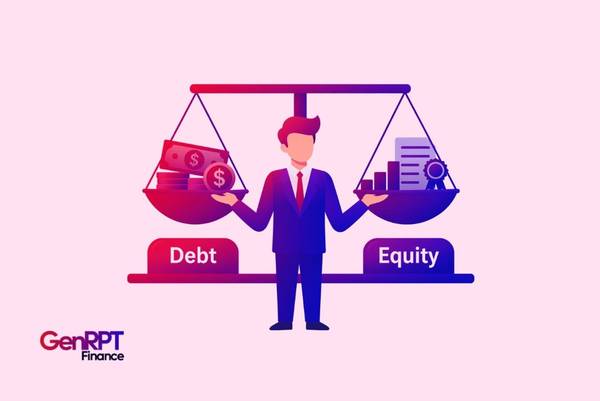
In most equity research, capital structure is treated as context. Analysts focus on growth, margins, and strategy, while debt sits in the background. However, there are situations where capital structure is not just a supporting factor, it becomes the core investment thesis. In these cases, valuation, risk, and returns are driven more by financing decisions than by operating performance. For professionals working in investment research and building an equity research report, recognizing when this shift happens is critical for accurate equity research analysis and actionable investment insights.
What It Means for Capital Structure to Become the Thesis
A capital structure becomes the thesis when changes in leverage, refinancing, or financial constraints dominate the investment outcome.
Instead of asking:
How fast is the business growing
The key question becomes:
Can the company manage its obligations
This shift affects:
equity valuation
financial forecasting
For investment analysts, the focus moves from earnings to survivability and optionality.
Situations Where This Happens
High Leverage Environments
Companies with significant debt loads often see equity value driven by small changes in performance.
In such cases:
A slight improvement in cash flow can increase equity value significantly
A small decline can wipe out equity value
This impacts:
equity risk
portfolio at risk
Refinancing Cycles
When large portions of debt are approaching maturity, refinancing becomes the central issue.
Questions include:
Will lenders extend terms
At what cost
Under what conditions
This affects:
cost of capital
liquidity analysis
Distressed or Near-Distressed Companies
In stressed situations, capital structure defines outcomes.
Equity holders are last in priority
Debt holders control restructuring
This impacts:
risk analysis
financial risk assessment
For portfolio managers, capital structure determines recovery scenarios.
Why Traditional Analysis Falls Short
Traditional models often assume:
Stable capital structure
Predictable cost of debt
When capital structure becomes dynamic, these assumptions break.
This affects:
financial modeling
valuation methods
For professionals in investment banking and financial consultants, this requires a different analytical approach.
The Link Between Capital Structure and Equity Value
Equity value is essentially the residual after debt obligations are met.
When capital structure is stable:
Equity reflects business performance
When it is unstable:
Equity reflects financial risk
This impacts:
Enterprise Value
equity valuation
How Leverage Amplifies Outcomes
Leverage acts as a multiplier.
Positive scenario:
Improved earnings increase equity value disproportionately
Negative scenario:
Declining earnings reduce equity value sharply
This affects:
performance measurement
scenario analysis
Role of Covenants and Restrictions
Covenants become critical when capital structure is central.
They may:
Limit operational flexibility
Trigger renegotiation
Accelerate financial stress
This impacts:
financial risk mitigation
portfolio risk analysis
Cash Flow Becomes the Key Metric
When capital structure dominates, cash flow matters more than earnings.
Analysts focus on:
Operating cash flow
Free cash flow after debt service
This improves:
financial forecasting
liquidity analysis
For financial advisors and wealth advisors, this is essential for risk assessment.
Market Perception and Capital Structure
Markets react strongly to changes in capital structure.
Events such as:
Debt issuance
Refinancing announcements
Credit rating changes
Can drive:
Price volatility
This affects:
market sentiment analysis
equity performance
Why Analysts Often Miss This Shift
Focus on Operating Metrics
Analysts may continue focusing on growth and margins even when financial structure is the key driver.
Delayed Recognition of Risk
The shift from operational to financial risk is often gradual and overlooked.
Overreliance on Historical Models
Models built on stable assumptions may not capture changing dynamics.
This impacts:
equity research analysis
financial research
How to Identify When Capital Structure Is the Thesis
Analysts should watch for specific signals.
High leverage relative to cash flow
Short debt maturities
Rising interest costs
Covenant pressure
These indicators suggest:
Capital structure is becoming dominant
This improves:
trend analysis
risk assessment
Role of AI in Capital Structure Analysis
Tracking capital structure dynamics manually can be complex. Tools like GenRPT Finance enhance this process.
Using ai for data analysis and ai for equity research, these tools can:
Analyze leverage trends
Identify refinancing risks
Track covenant pressures
Generate automated equity research reports
As an ai report generator and financial research tool, GenRPT Finance helps financial data analysts and investment analysts adapt to changing conditions.
Practical Example
Consider a company with moderate growth but rising debt.
Initial phase:
Focus is on earnings growth
Later phase:
Debt increases
Interest costs rise
Refinancing risk emerges
At this point:
Capital structure becomes the main driver of valuation
For equity research reports, this shift must be reflected in analysis.
Impact on Investment Strategy
When capital structure becomes the thesis, investment strategy changes.
Analysts focus on:
Downside protection
Recovery scenarios
Timing of refinancing
This improves:
portfolio insights
investment insights
For asset managers, this leads to more informed decisions.
Linking to Broader Market Conditions
Capital structure sensitivity increases under certain conditions.
These include:
Rising interest rates
Tight credit markets
Changing macroeconomic outlook
This impacts:
market risk analysis
equity market outlook
Conclusion
There are moments when capital structure stops being background information and becomes the core investment thesis. In these situations, equity value is driven more by financial structure than by operational performance.
For professionals in equity research, investment research, and equity research analysis, recognizing this shift is essential for accurate financial forecasting, improved portfolio risk analysis, and stronger investment insights.
With tools like GenRPT Finance, analysts can leverage ai data analysis to track capital structure dynamics, identify risks, and produce more reliable equity research reports. This enables better decision-making in a complex equity market.
FAQs
When does capital structure become the main investment factor
When leverage, refinancing risk, or financial constraints dominate outcomes.
Why is leverage important in equity analysis
It amplifies both returns and risks.
How does capital structure affect valuation
It determines risk levels, cost of capital, and equity value.
What signals indicate rising capital structure risk
High debt, short maturities, and increasing interest costs.
How does AI help in analyzing capital structure
AI tools track trends, identify risks, and generate insights quickly.
